The four numbers
Every quote comes down to these. Change one and the payment moves.
| The number | What it is | What to know |
|---|---|---|
| Amount financed | The price, plus anything added to the loan, minus your down payment. | Taxes, fees and add-ons can be rolled in. Ask for a list of everything in the figure. |
| Down payment | The cash or trade value you put in at the start. | More down means less to borrow. Lenders often ask for more from a new business or on an older truck. |
| Term | How many months you have to repay. | A longer term lowers the payment and raises the total interest. Lenders often give shorter terms on older, higher-mile trucks. |
| Rate | What the lender charges you to borrow. | It depends on your credit, your time in business, the truck, the lender and the market. Ask for the rate and every fee in writing. |
This guide doesn’t quote rates or down payments, because they change with the lender, the borrower and the market. Get quotes from more than one lender, and compare the total you would repay as well as the payment. The truck payment calculator lets you try your own numbers.
What lenders look at
The truck secures the loan, so a lender is judging two things: whether you can pay, and what the truck is worth if you don’t.
- Your credit
- Lenders generally check the owner’s personal credit, and the business’s credit if it has any. Many ask the owner of a small business to guarantee the loan personally.
- Time in business
- A longer track record generally makes approval easier. A new business can still find financing with some lenders, often with more down, a higher rate or more paperwork.
- The truck’s age and miles
- Many lenders set limits on how old a truck can be or how many miles it can have. Some look at how old it will be when the loan ends. The limits differ, so ask before you settle on a truck.
- Your work and cash flow
- Expect questions about what you haul, who you haul for and what comes in each month. Bank statements usually tell that story.
- Who is selling
- Some lenders handle a private sale differently from a dealer sale, and some won’t finance one. Ask the lender early.
- The title
- The lender will want a clean title and will generally be listed on it as lienholder until the loan is paid. The buyer’s guide covers what to check on a title.
Age and miles are only part of a truck’s condition. Read how to judge miles and engine hours before you decide a truck is worth financing.
Loan or lease, in general terms
Both spread the cost over time. The difference is who owns the truck.
| What to compare | Loan | Lease |
|---|---|---|
| Who owns the truck | You do. The lender holds a lien on the title until the loan is paid. | The leasing company does, for the length of the lease. |
| At the end | The lien is released and the truck is yours. | It depends on the contract. You may return the truck, buy it for a set amount, or buy it at its value at that time. |
| What to read closely | The rate, the fees, and any charge for paying the loan off early. | The end-of-lease terms, any mileage or condition limits, and who pays for repairs. |
Loans and leases are taxed and booked differently, so ask your accountant which fits your business. A lease-purchase offered through a carrier is a different arrangement again. Read that contract closely before you sign.
Paperwork to gather
Each lender has its own list. Having these ready generally saves time.
- About you
- Your driver’s license, and your CDL if the truck needs one.
- About the business
- Formation papers, your EIN, and your USDOT or MC number if you run under your own authority.
- About the money
- Recent bank statements and tax returns. Some lenders ask for a list of what you owe on other equipment.
- About the truck
- Year, make, model, VIN, miles, price and the seller’s details. You can confirm the factory details with the VIN lookup.
- About insurance
- Lenders generally require physical damage coverage on the truck, with the lender named on the policy. Get a quote early, because the cost belongs in your numbers.
- About its condition
- Keep the inspection report, the ECM report and the service records together. You need them for your own decision, and a lender may ask.
Put the payment against your cost per mile
A payment you can cover in a good month is not the test. The test is whether the truck earns more per mile than it costs.
The payment is a fixed cost. You owe it whether the truck runs or sits. Divide the monthly payment by the miles you expect to run in a month and you have the payment per mile. Run half the miles and that figure doubles. Then add the rest: insurance, fuel, maintenance, tires, and driver pay if you have a driver. The cost per mile calculator does the math and shows a break-even rate. Compare it with what your freight pays per mile.
Cheaper to buy, or cheaper to run?
An older truck usually means a smaller loan and a lower payment. It can also mean more repairs and more days down. A newer truck often reverses that. Put a repair allowance in your numbers either way. On a late-model diesel, the emissions system is one of the places that allowance can go.
- Truck paymentEstimate a payment, or work back from a payment to a price.
- Cost per mileSee what a truck costs to run for every mile.
- Fuel costWork out diesel cost for a trip or a month.
This guide is general information and it is not financial, tax or legal advice. Terms vary by lender. Read every document, and ask the lender about anything you don’t understand before you sign.
Shop the trucks
Know your number first, then look at trucks that fit it. Tell John if financing is part of your plan.
 Box trucksLocal delivery and moving
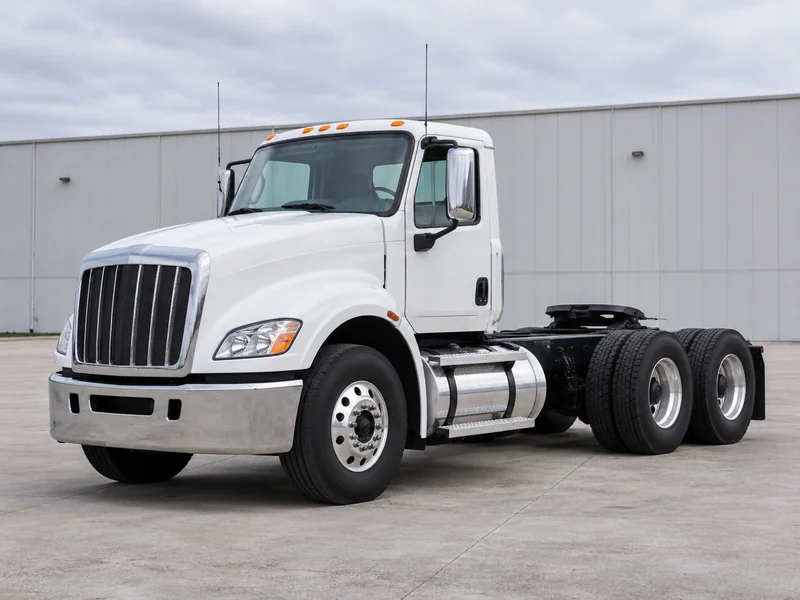 Day cabsRegional routes and daily runs
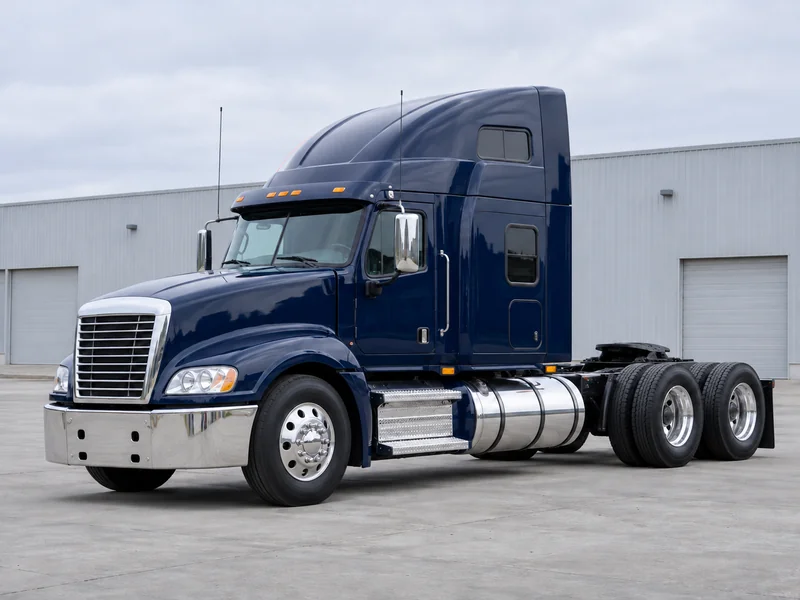 SleepersLong-haul work
 Dump trucksConstruction and heavy hauling
Truck images illustrate each category. See all listed trucks.
Common questions
How much do I need to put down on a used commercial truck?
It varies with the lender, your credit, your time in business and the truck, so this guide doesn’t quote a figure. Ask each lender what it needs for your situation, and get it in writing.
Can I finance an older or high-mile truck?
Often, yes, but your choices narrow. Many lenders set limits on a truck’s age or miles, and terms on older trucks are often shorter. Ask the lender about its limits before you settle on a truck.
Can a new business get truck financing?
Some lenders work with new businesses and new authorities. Expect to be asked for more down, more paperwork or a higher rate than an established business would see. It varies by lender.
Is a longer term better?
A longer term lowers the monthly payment, but you pay more interest in total. You can also end up owing more than the truck is worth. Match the term to how long you expect to run the truck.
Is a loan or a lease better?
It depends on your business. With a loan you own the truck. With a lease the leasing company does, and the contract decides what happens at the end. They are taxed and booked differently, so ask your accountant.
What should I tell John?
Tell John if financing is part of your plan, along with your budget, the kind of truck you need and your timing. Every inquiry goes to John first.